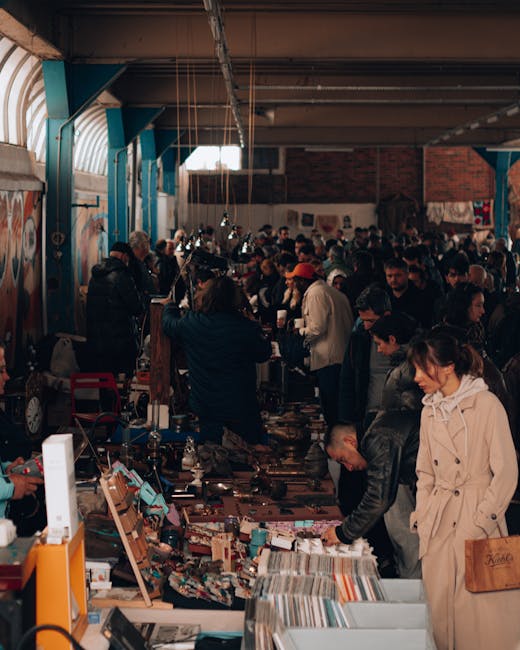
Deptford Market traders: rubbish clearance guide for SE8 stalls
Running a stall in Deptford Market means dealing with far more than customers, stock and weather. You also have to manage packaging, broken display items, unsold goods, food-related waste, and the awkward build-up that appears at the end of a busy trading day. If rubbish is left to pile up, it can block walkways, attract complaints, slow your pack-down, and make a market pitch look untidy before the next morning's trade begins.
This guide is for SE8 traders who want a clear, practical way to handle rubbish clearance without creating extra hassle. You will find out what needs clearing, how stall waste is usually handled, which mistakes cause problems, and when it makes sense to use a professional service such as rubbish clearance or business waste support. The aim is simple: keep your stall efficient, your pitch tidy, and your trading day as smooth as possible. Because let's face it, nobody wants to spend the last 20 minutes of a shift wrestling with collapsing cardboard.
Table of Contents
- Why rubbish clearance matters for Deptford Market traders
- How stall rubbish clearance works in practice
- Key benefits and practical advantages
- Who this is for and when it makes sense
- Step-by-step guidance for SE8 stalls
- Expert tips for better results
- Common mistakes to avoid
- Tools, resources and recommendations
- Law, compliance, standards, and best practice
- Options, methods, or comparison table
- Case study or real-world example
- Practical checklist
- Conclusion
- Frequently asked questions
Why Deptford Market traders: rubbish clearance guide for SE8 stalls Matters
Market stalls generate a very particular kind of waste. It is usually light enough to be deceptive, bulky enough to get in the way, and varied enough to become a nuisance if you do not sort it properly. Cardboard, plastic wrap, damaged hangers, crates, old signage, food packaging, tape, cable ties, offcuts, and end-of-day leftovers all need different handling. If you run a stall in SE8, the challenge is not just removing rubbish. It is removing it quickly, safely, and in a way that fits around market life.
A tidy stall is not only about appearances. It affects how you work. When waste is stacked badly, staff lose time, customers lose space, and fire exits or shared access routes can become awkward. In busier trading zones, a poor clearance routine also makes it harder for neighbours to keep their own pitches clean. That is why a reliable approach to rubbish removal matters as much as your display layout or your stock rotation.
There is also the reputational side. Stallholders in a market community are visible. People notice whether a pitch is well managed. If a trader consistently leaves waste behind, it can create friction with organisers, neighbouring traders, and customers. On the other hand, a stall that clears down neatly often looks more professional, even when the goods themselves are simple. In a place like Deptford Market, where pace and practicality matter, that small edge counts.
How Deptford Market traders: rubbish clearance guide for SE8 stalls Works
Stall rubbish clearance usually follows a straightforward pattern, but the details depend on what you sell and how much waste you produce. In broad terms, you sort waste at source, store it safely during trading hours, move it to a temporary holding point at pack-down, and arrange collection or disposal according to the material type.
For many traders, the process starts before opening. You decide what storage space is available behind or beneath the stall, and you separate reusable packaging from waste that must go. Throughout the day, waste should be contained rather than scattered. At close, everything is grouped into manageable loads. This is where a service that handles waste collection or waste disposal can save real time, especially if your stall produces bulky packaging or stock-related offcuts.
The process is also shaped by the type of trader you are:
- Food and drink stalls may have more packaging, disposables, and food-related residue.
- Clothing and accessories stalls often deal with hangers, polybags, tags, and cardboard.
- Household goods stalls may generate broken items, wrap, and mixed materials.
- Temporary event stalls often have a "clear everything today" requirement.
For heavier or awkward items, you may need a more focused service. For example, damaged display units, old shelving, or worn furniture are easier to remove using furniture disposal, while dismantled stall fittings or leftover construction-style materials may be better handled through builders waste. If you are clearing a storage room or back-room area attached to the stall, garage clearance can also be relevant when the space has become a catch-all for surplus items.
In practice, the best system is the one that matches your trading rhythm. A weekday-only stall with low volume has different needs from a high-turnover pitch that ends each day buried in cardboard. The right clearance method should reduce friction, not add a new admin job to your list.
Key Benefits and Practical Advantages
The obvious benefit is cleanliness, but the real value goes deeper than that. Good rubbish clearance protects time, space, and consistency. Those are the three things most traders never have enough of.
1. Faster pack-down
When waste is pre-sorted and handled regularly, closing the stall becomes a short, predictable routine instead of a last-minute scramble.
2. Better use of limited space
Market pitches are not generous. Keeping waste under control means more room for stock, movement, and customer access.
3. Fewer complaints and less disruption
Clean, contained waste reduces the risk of issues with neighbouring traders, market staff, and passers-by.
4. More professional presentation
A neat stall signals that the trader is organised. That matters in a crowded market environment where first impressions are quick.
5. Easier handling of bulky items
Some waste is simply awkward. Broken rails, damaged boards, old counters, and surplus display pieces are much easier to deal with when you have a plan rather than improvising at the end of the day.
6. Better safety
Loose wrapping, torn sacks, and stacked boxes can become trip hazards. Market work is busy enough without adding avoidable risks.
Expert summary: For SE8 stalls, the best rubbish clearance strategy is usually not the biggest one. It is the one that keeps your pitch clear every day, reduces handling time, and fits the way you actually trade.
There is a quieter advantage too: stress reduction. Once traders have a stable system, they stop worrying about where the waste will go or whether the back of the stall is becoming unmanageable. That calm, almost boring reliability is exactly what good operations should feel like.
Who This Is For and When It Makes Sense
This guide is relevant to a wide range of Deptford Market traders, but it is especially useful if you regularly produce mixed or bulky waste. A small stall with little packaging may only need occasional clearance. A busier pitch selling boxed goods, display products, or food items may need a more regular approach.
It makes sense to improve your waste handling if any of the following sound familiar:
- You finish the day with boxes, wrapping, and broken-down packaging everywhere.
- Your storage area is cluttered and hard to access.
- Waste collection is interfering with your trading hours.
- You need a cleaner process before a busy weekend.
- There are bulky items that do not fit into standard bins.
- You want a more reliable routine for multi-stall or shared-site operations.
For some traders, this is also part of a broader clearance need. A market seller may be moving stock between a stall, a flat, and a storage space, which means the waste stream is mixed with household or business clutter. In those cases, related services such as flat clearance, home clearance, or office clearance may be a better fit for the wider situation, not just the stall itself.
If your trading setup changes often, clearance needs can change with it. Seasonal traders, weekend sellers, and traders with rotating stock lines tend to notice this first. One week may be light; the next may involve a full reset. That is normal. The trick is not to treat every week as if it will solve itself.
Step-by-Step Guidance
Here is a practical workflow that works well for most market traders in SE8. It is simple enough to use daily, but structured enough to keep you out of trouble.
- Sort waste as you go. Keep cardboard, soft plastics, food waste, and broken items separate where possible. Even basic separation helps.
- Use sturdy containers. Thin sacks split easily, especially when filled with wet or sharp waste. Strong bags or lidded bins reduce mess.
- Keep a clear storage zone. Mark a place behind the stall for empty boxes, packing material, and items waiting to go.
- Break down bulky packaging early. Flatten cardboard before it becomes a leaning tower that nobody wants to touch.
- Remove hazardous or sharp waste immediately. Broken glass, metal edges, and damaged fittings should not sit around waiting for closing time.
- Check what can be reused. Some crates, storage tubs, hangers, and display materials can be reused rather than thrown away.
- Arrange a collection method that matches your volume. If your waste is heavy or irregular, a planned pickup is often easier than trying to move it in small trips.
- Finish with a visual sweep. Walk the pitch, check under tables, behind rails, and around storage corners. Waste often hides in plain sight.
If you need a larger clearance after a stock refresh or a seasonal changeover, a general service such as rubbish collection or waste clearance may be the quickest route. For traders who regularly move mixed loads, that is often simpler than trying to schedule one-off removal for every item type.
A useful habit is to treat closing time as a reset, not just an ending. If you leave one pile for "later", later has a habit of turning into next week.
Expert Tips for Better Results
Small operational changes make a bigger difference than most traders expect. In our experience, the stalls that stay easiest to manage are the ones that build waste control into the layout, rather than treating it as an afterthought.
Keep packaging separate from real rubbish
Cardboard and clean wrap are often the easiest materials to handle. If they get mixed with food waste or damaged stock, they become much harder to move. A simple separation routine saves time and reduces smell.
Choose stackable storage where possible
Stackable boxes or collapsible crates are often better than random sacks. They keep the pitch tidier and reduce the chance of items falling into customer space.
Build a "clear path" habit
Every stall should have a route for moving waste out without crossing the main customer flow. That sounds basic, but in a busy market environment it makes a real difference.
Use a regular clear-out rhythm
Don't wait until the stall is at breaking point. A recurring weekly or fortnightly clearance is often more efficient, especially if your stock arrives in bulk.
Plan for the odd awkward item
Every trader has one. Maybe it is a bent metal stand, a cracked shelf, or a sofa-sized display piece nobody wants to touch. For those items, specialist help such as sofa removal can be more practical than general waste handling.
Think about the wider business space
If your stall is part of a broader trading operation, waste often spills into office, storage, or back-room spaces. A service like waste removal can help clean out multiple problem zones in one visit, rather than dealing with them piecemeal.
One more tip: take five minutes to photograph your cleared-down pitch once it is tidy. Not for vanity. It gives you a reference for what "good" looks like the next time the space starts to get cluttered again.
Common Mistakes to Avoid
Most waste problems at market level are not dramatic. They come from a handful of repeat mistakes that slowly create bigger headaches.
- Leaving everything until the end. When waste is ignored during trading, it becomes a much larger job later.
- Overfilling bags. This leads to tears, spills, and awkward lifting.
- Mixing clean recyclables with food or liquid waste. Once contamination happens, disposal becomes less efficient.
- Using the pitch as a storage cupboard. A stall is a trading space, not a permanent overflow area.
- Assuming all waste can go in the same bin. It cannot. Different materials need different handling.
- Forgetting about bulky items. Shelves, rails, and display furniture often need more than a standard sack or container.
- Blocking walkways while clearing. This is inconvenient at best and risky at worst.
Another mistake is underestimating how much waste comes from packaging rather than products. A market trader may sell relatively little stock and still generate a lot of rubbish simply because every delivery arrives wrapped, boxed, padded, or strapped. That is why it helps to think in terms of volume and shape, not just weight.
If you are regularly dealing with stock packaging, leftover fixtures, or end-of-line items, aligning your process with business waste handling is often more practical than ad hoc disposal.
Tools, Resources and Recommendations
You do not need a complex setup to manage stall rubbish properly. A few basic tools can make the whole process much smoother.
| Tool or resource | Why it helps | Best used for |
|---|---|---|
| Heavy-duty sacks | Reduce tearing and spills | General packaging and light mixed waste |
| Stackable crates | Keep empty materials tidy | Cardboard, wraps, reusable items |
| Lidded bins | Control smell and keep pests away | Food-related stall waste |
| Foldable trolley | Improves movement of bulky loads | Moving waste to a pickup point |
| Labels or colour coding | Makes sorting faster | Multi-type waste separation |
| Scheduled collection service | Prevents build-up | Regular or heavy waste output |
For traders who need a more general clean-up, it can be useful to explore broader support such as rubbish removal or waste collection. If the problem is not limited to the stall itself, and includes storage or mixed items from home and work, a wider clearance service may be the smarter option.
For local context, the site's Deptford area page and Southwark coverage are useful if you want to see how services fit the wider neighbourhood. Traders working across nearby areas may also find the South East London service area helpful for planning one-off or recurring clearances.
Law, Compliance, Standards, or Best Practice
Waste handling for traders is not something to improvise casually. While this guide is not legal advice, there are some common-sense compliance points and accepted UK best practices worth keeping in mind.
First, traders remain responsible for the waste they generate until it is handled properly. That means you should know what is being discarded, keep waste contained, and use a trustworthy disposal route. If you use an outside service, check that it operates transparently and can explain how waste is handled. Good providers should be clear about what they collect, what they do not collect, and how they deal with mixed loads.
Second, do not leave waste where it creates a hazard. This includes shared paths, entrances, access routes, and areas used by customers or staff. A market is a public-facing environment, so basic tidiness is part of safe working practice.
Third, separate hazardous or unusual items rather than forcing them into general waste. Sharp metal, broken glass, electrical items, and contaminated materials may need special handling depending on the item and the service involved. If a load includes anything uncertain, ask before you move it. That one extra question can prevent an expensive mistake.
Fourth, check your own site rules. Market operators and local landlords may have expectations about closing routines, permitted storage, and collection timings. Those rules can be as important in practice as any general waste principle. If you are not sure, it is better to clarify early than to guess and discover you have been doing it wrong for months.
Finally, keep records where appropriate. For larger or recurring business clearances, a simple note of what was collected and when can help with internal tracking. It is not glamorous, but then compliance rarely is.
Options, Methods, or Comparison Table
There are usually three practical ways to handle market waste in SE8: self-clearance, mixed regular collection, or a booked clearance service. The right choice depends on volume, frequency, and how much time you can spare.
| Method | Best for | Pros | Watch-outs |
|---|---|---|---|
| Self-clearance | Very small volumes | Low direct cost, simple setup | Time-consuming, awkward for bulky waste |
| Regular collection | Ongoing waste output | Predictable, keeps stall tidy | Needs organisation and consistency |
| Booked clearance service | Bulky or mixed loads | Fast reset, less lifting, more flexibility | Needs scheduling and clear item details |
If your stall produces mostly cardboard and light packaging, a steady collection routine may be enough. If you regularly need to remove awkward stock fixtures, old furniture, or mixed clutter, a booked clearance is often more efficient. Traders with storage overflow often combine approaches: routine light-waste handling plus occasional deeper clear-outs.
That is also where services such as home clearance or house clearance may become relevant if your trading stock is stored at home between market days. The practical question is not "Which service sounds most specific?" It is "Which service will remove the problem with the least disruption?"
Case Study or Real-World Example
Consider a fictional but realistic SE8 trader selling homeware and small decorative items at Deptford Market. Each delivery arrives with cardboard boxes, bubble wrap, corner protectors, and plastic film. During busy weeks, there are also damaged items, display props, and the occasional old shelf that has outlived its usefulness.
At first, the trader handles everything manually and takes waste home in the boot of the car. It works, but only just. The back seat becomes a rotating storage unit for flattened boxes, and closing time starts to drag. Customers occasionally have to step around a pile of packaging while the stall is being packed down. Not ideal.
The trader then changes the system. Clean cardboard is flattened immediately. Mixed waste is bagged separately. Broken display pieces are listed for removal instead of being shoved behind the table. Once a week, a collection is booked for the larger items, while ordinary waste is kept under control daily. The result is not dramatic, but it is noticeable: quicker pack-down, less clutter, and a cleaner pitch.
The real win is not just tidiness. It is mental bandwidth. Once the waste problem stops taking up headspace, the trader can focus on stock, sales, and customer interaction. That is often the point where the whole stall starts to feel easier to run.
Practical Checklist
Use this checklist before you close the stall or plan a clearance visit.
- Have all waste streams been separated as much as practical?
- Are cardboard and packaging flattened or bundled securely?
- Have sharp or broken items been isolated safely?
- Is the walkway clear for staff and customers?
- Are bulky items marked for collection rather than forgotten?
- Has the storage area been checked for hidden clutter?
- Do you know whether anything needs specialist handling?
- Is the load ready for a quick handover or collection?
- Have you confirmed any market or site rules that apply?
- Is there a repeat plan for the next trading day?
Quick practical takeaway: If you can clear your stall in one calm pass, your waste system is probably working. If clearing the pitch feels like a weekly rescue mission, the process needs tightening.
Conclusion
Rubbish clearance for Deptford Market traders is not just about getting rid of waste. It is about keeping a pitch workable, reducing stress, protecting the customer experience, and making sure you are not fighting your own clutter at the end of every day. SE8 stalls tend to work best when waste handling is simple, repeatable, and matched to actual trading volume.
The most effective approach is usually a mix of daily sorting, sensible storage, and the right collection method for bulky or irregular items. If you need a one-off reset or ongoing help, choosing a service that understands business waste, market pace, and local access can make the whole process much easier. A well-managed stall looks better, runs better, and feels better to work in.
If you are ready to tidy up your pitch, clear bulky waste, or plan a more reliable collection routine, the next step is straightforward.
Get a free quote today and see how much you can save.
Frequently Asked Questions
What rubbish can Deptford Market traders usually clear from a stall?
Most stalls generate a mix of cardboard, plastic wrap, packaging tape, damaged display items, broken stock, and general trade waste. Some traders also need help with old furniture, shelving, or back-room clutter.
How often should a market stall arrange rubbish clearance?
That depends on trading volume. Light sellers may only need occasional help, while busier stalls often benefit from regular collection or a weekly reset. The right schedule is the one that prevents build-up before it becomes a problem.
Is business waste the right option for market traders?
Often, yes. If the waste comes from trading activity, it usually falls under business waste handling rather than household rubbish. For mixed or bulky items, a general clearance service may be more practical.
Can I put all my stall waste in one bag?
You can in some cases, but it is not always the best approach. Clean cardboard, food waste, sharp items, and mixed refuse are easier to handle when they are separated. Sorting also helps avoid spills and makes collection smoother.
What should I do with broken display furniture or shelving?
Set it aside safely and treat it as bulky waste. Depending on the item, a service such as furniture disposal or a broader rubbish removal booking may be the easiest option.
How do I keep waste from taking over a small stall?
Flatten packaging early, use stackable containers, and create one clear storage spot for items waiting to go. If you leave waste to spread across the pitch, it quickly becomes part of the trading space.
Do I need a special service for cardboard and packaging?
Not always, but if the volume is high, a collection service can save time and reduce clutter. Cardboard may look harmless, but in bulk it takes up a surprising amount of room.
What is the difference between waste collection and waste disposal?
Collection is the physical removal of the waste. Disposal refers to what happens after it has been taken away. In practice, traders usually care most about the collection being timely and the disposal route being proper.
Can market traders also use clearance services for their home or storage space?
Yes. Many traders store stock, packaging, or old fixtures at home or in a garage. In those cases, related services such as flat clearance, home clearance, or garage clearance can be useful alongside stall waste removal.
What are the biggest mistakes traders make with rubbish clearance?
The most common mistakes are leaving everything until closing time, overfilling sacks, mixing materials that should be separate, and treating the stall as temporary storage. Those habits make the job slower and less safe.
Is there a local service area for Deptford traders?
Yes. Services covering Deptford, Southwark, and wider South East London can be helpful if you need practical support close to the market. That makes scheduling and access easier than using a service unfamiliar with the area.
How do I know whether I need rubbish removal or a deeper clearance?
If you only need waste taken away, rubbish removal or collection may be enough. If the stall, back room, or storage area has become cluttered with mixed items, a deeper waste clearance may be the better choice.