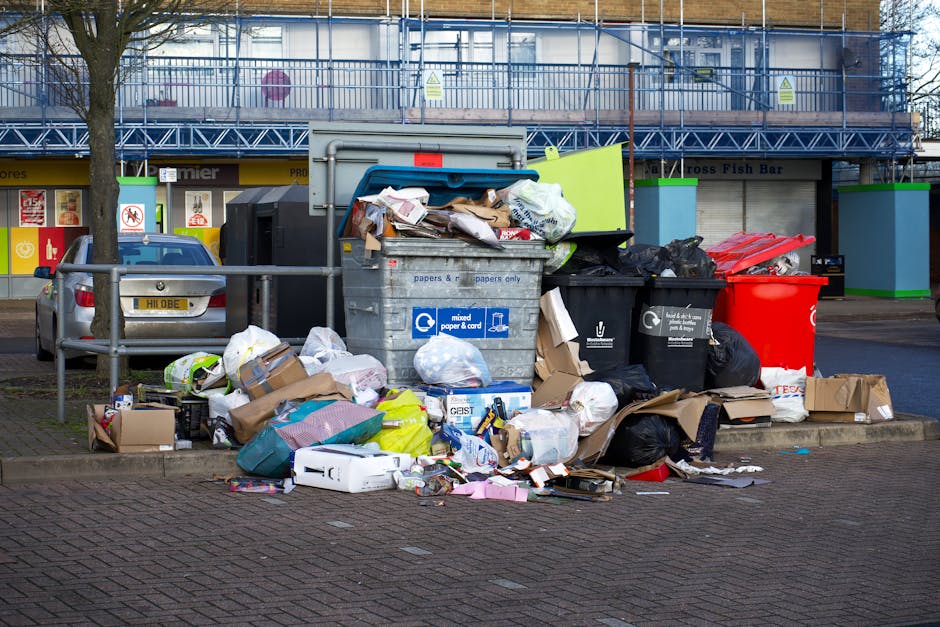
Lewisham Council bulky waste rules: fines, permits and costs
If you are trying to clear out an old sofa, broken wardrobe, mattress, or a pile of unwanted household items, the rules can feel strangely fiddly. One minute you are just trying to get a bit of space back, the next you are wondering whether you need a permit, what Lewisham Council may charge, and whether dumping it on the pavement could land you with a fine. Truth be told, that is where a lot of people get caught out.
This guide breaks down Lewisham Council bulky waste rules: fines, permits and costs in plain English. You will learn what counts as bulky waste, how local collection systems usually work, when costs apply, what can trigger penalties, and how to avoid the kind of mistake that turns a simple clear-out into an avoidable headache. If you want the practical version rather than the bureaucratic version, you are in the right place.
Table of Contents
- Why Lewisham Council bulky waste rules: fines, permits and costs Matters
- How Lewisham Council bulky waste rules: fines, permits and costs Works
- Key Benefits and Practical Advantages
- Who This Is For and When It Makes Sense
- Step-by-Step Guidance
- Expert Tips for Better Results
- Common Mistakes to Avoid
- Tools, Resources and Recommendations
- Law, Compliance, Standards, or Best Practice
- Options, Methods, or Comparison Table
- Case Study or Real-World Example
- Practical Checklist
- Conclusion
- Frequently Asked Questions
Why Lewisham Council bulky waste rules: fines, permits and costs Matters
Bulky waste is one of those things people only think about when it is already taking up room in the hallway, the spare room, or the bin store outside. In a busy London borough like Lewisham, that matters more than it might seem. Shared streets, limited storage space, and frequent collection pressures mean that improper disposal is noticed quickly. And once an item ends up on the pavement without the right arrangement, it is no longer just an inconvenience. It can become a compliance issue.
The phrase Lewisham Council bulky waste rules: fines, permits and costs covers three things people usually need at the same time: what is allowed, what it may cost, and what happens if you ignore the process. That is the heart of the matter. Most readers are not trying to do anything dodgy. They are usually trying to clear space after a move, a refurbishment, a bereavement, or just a long-overdue declutter. But the rules still matter because the wrong disposal route can lead to extra charges, delays, fly-tipping concerns, or enforcement action.
There is also a practical reason to get this right. Council collections, private skip hire, and licensed waste carriers all work differently. Pick the wrong option and you may pay more than you need to. Pick no option at all and, well, that old sofa will not magically disappear overnight. I wish it did.
Expert summary: If bulky items are not handled through a lawful collection route, the risk is not just inconvenience. It can mean extra costs, an enforcement warning, or a fine if the waste is dumped, left out incorrectly, or passed to the wrong person.
How Lewisham Council bulky waste rules: fines, permits and costs Works
At a basic level, bulky waste disposal is about moving large household items from your property into an approved collection or disposal route. The exact rules can vary depending on item type, quantity, access, and whether the council provides a booked collection service, a recycling centre option, or another approved arrangement. The key idea is simple: large items should not be left on the street unless the collection has been arranged in line with the local process.
In practice, most people deal with bulky waste in one of four ways:
- Council collection for one-off or small numbers of larger items.
- Reuse or donation if the item is in usable condition.
- Private licensed removal for quicker or larger clear-outs.
- DIY transport to an appropriate waste site where permitted.
Where people get caught out is assuming all bulky waste is treated the same. It is not. A mattress, a broken wardrobe, an electrical appliance, and renovation debris may each be handled differently. Some items may be accepted in a bulky collection, some may carry extra handling considerations, and some may simply not belong in that route at all.
Costs also tend to depend on the collection type. For example, a council collection may be priced per item or per load, while a private service may quote based on volume, labour, access, and the nature of the waste. If the item is unusually heavy, difficult to remove, or contains restricted materials, the price can rise. That is fairly normal. The awkward bit is that many people only discover this after they have already moved the thing downstairs.
Permits come into play where a skip, a scaffold arrangement, or a temporary placement on the public highway is involved. A bulky waste collection itself may not require you to buy a permit, but other disposal methods often do. If you are unsure, do not guess. A permit issue is one of those boring admin details that becomes very interesting once enforcement notices start appearing.
Key Benefits and Practical Advantages
Following the rules is not just about avoiding trouble. There are some very real practical advantages, especially in a densely populated area.
- Less risk of fines or enforcement action if items are booked and presented correctly.
- Cleaner kerbside conditions, which matters for neighbours, pedestrians, and access.
- More predictable costs because you can compare approved collection options before the job starts.
- Better recycling outcomes when items go to the right route rather than being mixed with general rubbish.
- Less stress during moves, refurbishments, and end-of-tenancy clearances.
There is another benefit that people sometimes overlook: time. A properly arranged collection can save a lot of back-and-forth, especially if you have stairs, narrow hallways, or no car. Anyone who has tried to wrestle a bulky item through a Victorian terrace doorway will know exactly what I mean. It is not elegant. It is mostly elbows, sighs, and a lot of measuring.
If your waste includes items that can be reused or repaired, sorting them early can also reduce your disposal bill. A usable sofa that can be donated or collected for reuse may cost less overall than paying to throw it away as mixed bulky waste. That is not always possible, of course, but it is worth checking before you book a removal that is more expensive than it needs to be.
Who This Is For and When It Makes Sense
This guidance is for anyone in Lewisham who needs to get rid of one or more large household items and wants to do it legally, efficiently, and without wasting money. That includes:
- homeowners clearing out after a renovation or move
- tenants at the end of a tenancy who need to leave the property tidy
- landlords dealing with abandoned furniture
- people replacing beds, wardrobes, and white goods
- families clearing a loft, shed, or spare room
- small businesses that have household-style items and need to check the proper route
It makes sense to look at the rules before you lift a single item because the best disposal method depends on the item's condition, size, and urgency. If it is a single mattress and you are not in a rush, a council collection may be enough. If you have a flat full of furniture after a tenancy changeover, a licensed private removal service may be the more realistic option. If the item is reusable, a second-life route may be the most sensible and often the least wasteful one.
People also search for this topic after they have already done a bit of damage, if we are honest. They have put an item out, heard complaints, or received a warning note. If that is your situation, do not panic. The important thing is to act quickly, move the item if needed, and check the right process rather than doubling down on a mistake.
Step-by-Step Guidance
Here is a clean, practical way to handle bulky waste without making life harder than it needs to be.
- Identify the item carefully. Is it furniture, an appliance, a mattress, or something mixed with other waste? Write it down in simple terms.
- Check whether it can be reused. If it is usable, donation or resale may be better than disposal.
- Separate restricted items. Batteries, chemicals, paint, and some electrical components often need special handling.
- Measure the item and the access route. This sounds obvious, but door widths, stair turns, and lift access can change the whole job.
- Compare disposal options. Council collection, private licensed removal, or another approved route may be available.
- Confirm the cost structure. Ask whether the price is per item, per load, or based on labour and access.
- Check if a permit is needed. This matters for skips and anything occupying public space.
- Book the service and follow presentation rules. Place items where instructed and at the right time.
- Keep evidence. Save booking confirmations, receipts, and photos in case there is any dispute.
- Remove leftover fragments. Broken parts, packaging, and loose screws can still count as waste.
A useful habit is to group similar items together before you book. If you have two chairs, a broken chest of drawers, and an old desk, that may be more efficient than arranging each item separately. On the other hand, if one of those items is being reused, keeping it out of the disposal pile avoids unnecessary cost. Small decisions, but they add up.
And yes, paperwork feels dull. But when it comes to fines and permits, dull paperwork is your friend.
Expert Tips for Better Results
In our experience, the people who avoid problems with bulky waste usually do a few things well. Nothing fancy. Just sensible habits.
- Photograph items before booking. A quick photo helps with quotes and avoids misunderstandings about size or condition.
- Ask about mattress, appliance, or mixed-item surcharges. These can affect total cost more than people expect.
- Check access honestly. If the collection team has to carry an item down three flights of stairs, that is labour, and labour affects price.
- Keep bulky waste dry. Wet sofas and soaked chipboard are heavier and messier, which is nobody's idea of fun.
- Book early during busy periods. End-of-month moves and bank holidays can make collection slots tighter.
- Separate recyclable parts where possible. Metal, clean wood, and electricals may be dealt with differently.
One small but useful tip: if you are clearing several rooms, do the sort before you move items to the kerb. Otherwise you end up shifting the same thing twice, which is irritating in a very specific way only adults seem to understand.
If you are comparing providers, look beyond the headline price. The cheapest quote is not always the best value if it excludes labour, stair carrying, or proper disposal. A slightly higher but clear price can be much better than a low quote with surprise additions at the end.
Common Mistakes to Avoid
Most bulky waste problems are not dramatic. They are the kind of small, avoidable mistakes that snowball. Here are the usual culprits.
- Leaving items on the street without booking. This is the fastest way to create a complaint or enforcement issue.
- Assuming every large item is accepted the same way. It often is not.
- Ignoring permit requirements for skips or temporary road placement. A missing permit can become a very expensive oversight.
- Not checking whether the service price includes labour. "Collection only" and "collection plus carrying" are not the same thing.
- Using an unlicensed remover. If waste is fly-tipped, the original owner can still end up in the frame.
- Mixing hazardous items into general bulky waste. That can create safety and compliance issues.
- Forgetting about tenancy or lease rules. Some buildings have their own disposal procedures too.
A lot of trouble starts with the phrase, "It'll be fine for one night." Sometimes it is. Often it isn't. Councils and neighbours are not usually impressed by that plan, and fair enough.
If you have already placed something outside and are worried, act quickly. Move it, book the proper route, and keep a record of what you did. Speed and honesty are better than hoping the problem disappears before morning.
Tools, Resources and Recommendations
You do not need a truckload of tools to deal with bulky waste, but a few practical items make the job easier and safer:
- Measuring tape for doors, hallways, and item dimensions
- Gloves to handle splinters, staples, and sharp edges
- Furniture sliders or a sack truck for heavier items
- Strong tape or straps to secure loose parts
- Phone camera to document condition and collection proof
In terms of planning, the most valuable "resource" is a clear decision tree. Start with the item: reusable, recyclable, or disposal-only? Then ask: does it need special handling? Finally, decide whether a council route, a licensed private collection, or another approved option is best. That order saves time.
If you are managing a larger household clear-out, it can help to pair bulky waste planning with a general declutter. If you are also dealing with boxes, mixed rubbish, or office-style clearances, related guidance such as house clearance support in London may be useful when you are comparing broader removal options. For some readers, it is all part of the same job: fewer piles, fewer decisions, less mess.
Law, Compliance, Standards, or Best Practice
Bulky waste disposal sits inside the wider UK waste framework, even when the immediate question feels local and practical. The important principle is that waste should be handled by an appropriate route, and any person removing waste should be able to do so lawfully. In plain English: do not hand items to someone unless you are confident they are authorised to take them away responsibly.
For householders, the biggest compliance risks usually involve illegal dumping, misusing public land for storage, or using a remover who cannot demonstrate proper waste handling. For landlords and managing agents, the duty is broader because they may be responsible for common areas, abandoned items, or tenant-generated waste. A shared stairwell stacked with old furniture is not just messy; it can also create access and fire safety concerns.
Permits are another compliance point worth taking seriously. A permit may be needed when a skip or similar container is placed on a road, pavement, or other public space. The exact requirement depends on the arrangement, but the general rule is straightforward: do not assume temporary placement is allowed just because it looks harmless. It often is not.
Best practice is to keep records. Save the booking confirmation, take a photo after the collection, and keep the invoice or receipt. That way, if there is ever a dispute about whether the waste was collected correctly, you have something concrete to point to. It is a small habit, but it can save a big nuisance later.
Options, Methods, or Comparison Table
Different bulky waste options suit different situations. Here is a simple comparison to help you choose.
| Option | Best for | Typical advantages | Watch-outs |
|---|---|---|---|
| Council bulky waste collection | One-off household items or small clear-outs | Convenient, familiar, usually straightforward | May have booking rules, item limits, and specific costs |
| Private licensed removal | Urgent jobs, stairs, larger loads, mixed bulky items | Flexible timing, labour included, can handle awkward access | Prices vary, so check exactly what is included |
| Reuse or donation | Usable furniture or appliances | Can reduce waste and disposal cost | Not suitable for damaged or unsafe items |
| Skip hire with permit if needed | Renovations or larger household projects | Useful for lots of waste over several days | Permit, space, and loading restrictions may apply |
For many households, the decision comes down to speed versus simplicity. If you only have one or two items and no rush, a council route can be enough. If you are clearing a whole property or need the job done on a tight deadline, a licensed removal team may be better value once labour and access are included. Sometimes the cheapest option on paper is not the cheapest in real life. Funny how that happens.
Case Study or Real-World Example
Imagine a Lewisham resident clearing out a bedroom after moving in with a partner. There is a bed frame, a mattress, a small wardrobe, and a broken office chair. At first glance, it seems like one job. In reality, there are a few decisions to make.
The bed frame might be reusable if it is in good condition. The mattress, depending on its state, may need a specific bulky waste route. The wardrobe is awkward because it is large but flat-packed, and the chair is just bulky enough to be annoying. The resident checks the item list, measures the doorway, and decides the wardrobe and chair are not worth moving twice, so they arrange a collection with clear access instructions. The bed frame gets offered for reuse, which reduces the total disposal load. Not glamorous, but efficient.
If they had instead left everything beside the bins "for the morning," they could easily have faced a complaint from neighbours, missed collection timing, or a fine if the items were treated as unauthorised dumping. That is the difference a little planning makes. Not a huge drama, just fewer problems.
It also shows why costs are rarely just about the item itself. Condition, access, urgency, and disposal route all affect the final bill. A careful comparison, even over ten minutes with a notebook and a tape measure, can be enough to save money.
Practical Checklist
Use this before you book any bulky waste collection in Lewisham.
- Identify every item you want removed.
- Check whether any item can be reused or donated.
- Separate electricals, batteries, paint, and other restricted items.
- Measure the largest item and the access route.
- Decide whether council collection, private removal, or a permit-based option is best.
- Ask how the price is calculated.
- Confirm whether stairs, heavy lifting, or extra labour cost more.
- Check if a permit is needed for skips or roadside placement.
- Take photos before collection.
- Keep receipts, confirmations, and any reference numbers.
- Make sure items are placed exactly where instructed.
- Remove loose debris and packaging after the main items go.
That checklist may look simple, but it catches most of the expensive mistakes. It is the kind of thing you do once and then quietly thank yourself for later.
If you want to keep your wider property clearance organised, you may also find value in broader local moving and clearance planning, including house clearance support in London when a single bulky item has turned into a larger job.
Conclusion
Lewisham Council bulky waste rules are not there to make life awkward. They are there to keep streets clear, avoid unsafe dumping, and make sure large items are handled in a lawful, orderly way. Once you understand the basics, the process becomes much easier: check the item type, compare your options, confirm the cost, and make sure any required permit is in place before anything goes outside.
The real win is simple. You avoid fines, you avoid last-minute panic, and you usually spend less than you would by rushing into the wrong solution. A little planning goes a long way here, even if the pile of furniture in the corner is trying very hard to win the argument.
Get a free quote today and see how much you can save.
And if you are stood there looking at an old sofa right now, take a breath. One sensible decision at a time, and the mess starts to shrink.
Frequently Asked Questions
What counts as bulky waste in Lewisham?
Bulky waste usually means large household items that do not fit in normal bins, such as furniture, mattresses, and larger appliances. Exact acceptance can depend on the collection route, so it is worth checking item-by-item rather than assuming everything is included.
Do I need a permit for bulky waste collection?
Not usually for a standard booked bulky collection, but you may need a permit for a skip or any container placed on a public road or pavement. That is a separate issue and catches people out more often than you would think.
How much do bulky waste collections cost?
Costs vary depending on the number of items, labour, access, and the disposal method used. Council pricing and private removal pricing are not the same, so compare the full offer, not just the headline number.
Can I leave bulky waste on the pavement for collection?
Only if the collection has been arranged in the correct way and you are following the instructions given. Leaving items out without booking can lead to complaints or enforcement action.
What happens if I dump bulky waste illegally?
Illegal dumping can lead to fines or enforcement action. It also risks the waste being fly-tipped or removed improperly, which can cause more trouble than the original item ever did.
Can I put broken furniture next to my bins?
Not unless the council has told you to do so as part of an approved collection. Broken furniture left out informally can be treated as dumped waste rather than a booked collection.
Are mattresses accepted in bulky waste collections?
Often yes, but mattresses can be treated differently from other furniture and may come with separate handling or pricing. It is wise to confirm this before booking.
What if my item is still usable?
If it is in decent condition, donation or reuse may be better than disposal. That can reduce cost and waste, and it is usually the cleaner option all round.
How do I know if a waste remover is legitimate?
Ask whether they are licensed to carry waste and whether they provide receipts or confirmation of disposal. If someone is vague about where your waste goes, that is a red flag.
What should landlords in Lewisham do with abandoned bulky items?
Landlords should arrange an approved removal route and keep records, especially for items left behind after a tenancy ends. Common areas and shared access routes may also involve extra safety considerations.
Can I use a skip instead of a bulky waste collection?
Yes, if you have enough space and the right permissions. A skip can work well for bigger clear-outs, but it usually comes with permit and placement considerations that a simple collection avoids.
What is the safest first step if I am unsure about the rules?
Make a list of the items, note their condition, and check the correct disposal route before moving anything outside. That one pause can save money and a lot of unnecessary stress.