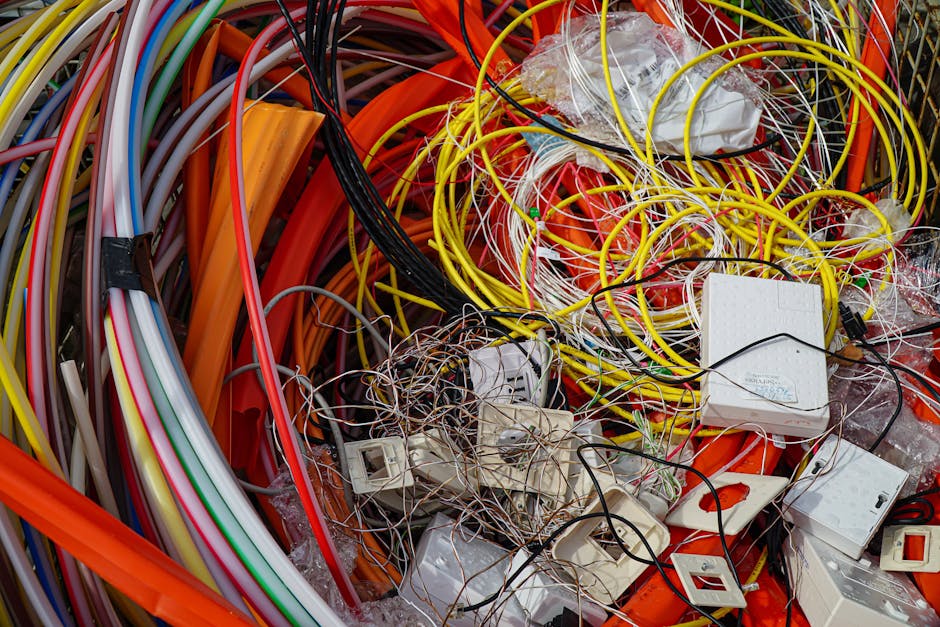
Managing oversized e-waste in Woolwich: safe disposal tips
If you've ever tried to move an old plasma TV, a dead office printer, or a chunky server cabinet down a narrow Woolwich stairwell, you'll know this is not the same as putting out a bag of general rubbish. Oversized e-waste is awkward, heavy, often fragile, and sometimes quietly risky because of batteries, wiring, screens, and hidden components. This guide to Managing oversized e-waste in Woolwich: safe disposal tips will help you handle it properly, avoid damage or injury, and choose a route that makes sense for your home or business. We'll keep it practical, local, and human. No fluff.
Whether you're clearing out a flat near Woolwich town centre, changing kit in a small office, or finally dealing with that old copier that has been sitting in the corner for months, the basics are the same: plan first, lift safely, separate what can be reused or recycled, and use a compliant disposal route. Simple enough in theory. Slightly less simple in real life, as anyone who has wrestled a printer into a hallway at 8 a.m. will tell you.
Why Managing oversized e-waste in Woolwich: safe disposal tips Matters
Oversized e-waste is not just "old tech". It often includes items that are bulky, delicate, and easy to mishandle: large televisions, desktop PCs, photocopiers, monitors, microwave-style catering equipment, rack units, printers, and similar equipment. In a place like Woolwich, where homes and commercial properties can have tight access, shared entrances, or limited loading space, the challenge is as much about safe movement as it is about disposal.
There's also the simple matter of risk. A cracked screen can leave sharp edges. A printer can have hidden toner dust. Batteries can overheat if damaged. Even a harmless-looking desktop unit can be awkward enough to twist someone's back if it is carried badly. To be fair, most problems happen not because people are careless, but because they underestimate the job.
It matters for another reason too: oversize electronics should not be treated like ordinary rubbish. Many items contain components that need proper handling to keep reuse, recycling, and disposal routes clean and safe. If you want a broader understanding of what sits inside the waste stream, our general approach to waste disposal and waste removal explains how different materials are typically separated and dealt with.
For local households, this often comes up during a move, a refurbishment, or a garage or loft clear-out. For businesses, it usually appears at the worst possible time: end-of-lease, office downsizing, or after a tech refresh when the old equipment suddenly has to disappear. If that sounds familiar, you're not alone.
How Managing oversized e-waste in Woolwich: safe disposal tips Works
The basic workflow is straightforward once you break it down. First, identify exactly what the item is and whether it contains batteries, cooling gases, glass, or removable parts. Then assess how it can be moved without injury or damage. After that, decide whether the equipment can be reused, donated, collected, or taken to a suitable waste route.
In practice, oversized e-waste often follows one of four paths:
- Reuse or resale if the item still works and is safe.
- Component separation if batteries, cables, or accessories need to be removed first.
- Specialist collection if the item is too large or awkward for a standard drop-off.
- Recycling or disposal through a compliant route once it has been properly sorted.
The safest route depends on access, quantity, weight, and condition. A single old screen is one thing. Four servers, a broken printer, and a cabinet full of loose wires is another. In those cases, a service like office clearance can be much more efficient than trying to improvise with a car boot and a prayer.
For homes, oversized e-waste often turns up alongside furniture and general clutter. That's where home clearance or, if the job is larger, house clearance may be the cleaner option. For small flats, flat clearance can be the more practical fit, especially where stairs, lifts, or parking make bulky lifting a bit of a puzzle.
Key Benefits and Practical Advantages
Doing this properly gives you more than just a tidier room. The benefits are real, especially in a busy part of south-east London where time and access both matter.
- Less risk of injury from lifting, dragging, or awkward carrying.
- Reduced chance of damage to walls, floors, lifts, and door frames.
- Better compliance with accepted waste-handling practice.
- More space reclaimed quickly in homes, offices, garages, and storage rooms.
- Cleaner recycling outcomes when items are sorted correctly.
- Less stress when the job is coordinated instead of improvised.
There's another quiet advantage: confidence. Once you know what to do with the odd, oversized stuff, clearing a room stops feeling like a huge, mysterious task. You start seeing the route out, not just the mess. That makes a difference.
And if the item is one part of a larger clear-out, it may be worth looking at related services such as rubbish clearance or waste clearance, especially when you have mixed materials rather than only electronics.
Who This Is For and When It Makes Sense
This advice is useful for a few different people, and the needs are slightly different in each case.
Homeowners and tenants
If you're replacing a TV, clearing out an attic, or finally getting rid of an old desktop tower that hasn't been switched on since broadband was painfully slow, the priority is safe handling and a lawful disposal route. In flats, the issue is often access rather than volume. In houses, it is usually weight and storage.
Landlords and managing agents
End-of-tenancy clearances often uncover a surprise pile of electronics: monitors, routers, kitchen appliances, game consoles, even old chargers stuffed in drawers. The quicker you separate e-waste from general junk, the easier the rest of the clearance becomes.
Small businesses and offices
Oversized e-waste is common in offices because it tends to accumulate slowly. A printer gets replaced, then a second one appears, then a filing cabinet becomes a tech graveyard. If you're dealing with a workplace refresh, pairing e-waste removal with business waste handling is often the more efficient route.
Trades, shops, and site teams
Retailers, installers, and site managers often need to remove screens, tills, signage units, or control boxes. These are not always "big" in the household sense, but they can still be awkward and need careful transport. If your job involves renovation debris as well, builders waste is another relevant category.
When does it make sense to use a professional clearance route? Usually when the item is heavy, too awkward to move safely, too large for your vehicle, or part of a mixed clear-out. Truth be told, that is most of the time.
Step-by-Step Guidance
Here's a practical way to handle oversized e-waste without turning it into a full-day drama.
- Identify the item
Check what it is, whether it works, and whether it has removable batteries, ink, toner, glass panels, or cables. Don't force anything open if you're unsure. - Decide whether it can be reused
If it still functions, consider passing it on, donating it, or reselling it. Reuse is often the cleanest outcome. - Disconnect and secure loose parts
Remove cables, memory cards, peripherals, and any detachable trays or stands. Tape cords neatly so they do not snag while being carried. - Clear a safe path
Open doors, move trip hazards, protect corners, and check whether you need a second person. A narrow hallway and a heavy item are not a good match. - Use proper lifting technique
Keep the load close, bend your knees, and avoid twisting. If the item is too heavy for one person, stop there. That's not weakness. That's common sense. - Protect fragile surfaces
Wrap screens or glass fronts with blankets or cardboard if they may be bumped during movement. - Choose the right collection route
For mixed household clutter, consider rubbish removal or rubbish collection. For a larger, scheduled clear-out, waste collection may fit better. - Keep records if you're in business
Businesses should keep clear notes about what was removed and how. That helps with internal tracking and good practice.
If the item is a sofa-sized media unit or similar awkward furniture-tech hybrid, you may also find sofa removal useful as a comparison point for how bulky, heavy items are typically managed.
Expert Tips for Better Results
A few small habits make oversized e-waste much easier to deal with. These are the kind of things people often skip until the job is already halfway gone wrong.
- Photograph the item first if you're arranging collection. It helps everyone understand the size and access conditions.
- Keep batteries separate where possible. Loose batteries deserve extra caution because they can be damaged or short-circuited.
- Do not stack heavy items on screens. This sounds obvious, but it happens more than you'd think.
- Use two people for awkward lifts. Two average lifts beat one heroic one every time.
- Unplug and cool equipment before moving it, especially printers, heaters, or anything that may have been in recent use.
- Plan for parking and access in Woolwich streets or estates. A good disposal plan can fall apart if the vehicle can't reasonably stop nearby.
One thing we see often is someone trying to "save time" by moving too much at once. That rarely saves time. It usually adds mess, sweat, and a sore shoulder. Not ideal.
If the project is part of a wider property clear-out, browsing furniture disposal alongside e-waste planning can be helpful because bulky electronics and furniture often leave together.
Common Mistakes to Avoid
Oversized e-waste causes trouble when people treat it like ordinary junk or rush the move. Here are the big ones to watch for.
- Dragging items along the floor, which damages both the item and the property.
- Putting screens in standard household rubbish, especially when a proper disposal route is available.
- Leaving batteries inside devices without checking whether they should be separated.
- Mixing electronics with wet waste or garden waste, which makes sorting harder later.
- Ignoring access restrictions in flats, estates, or shared commercial buildings.
- Underestimating weight. Many old machines are heavier than they look.
Another common mistake is assuming that because something is broken, it is automatically simple to dispose of. Broken can actually be more awkward. Fragile cracked glass and loose internal components are exactly the sort of thing you want handled carefully.
Tools, Resources and Recommendations
You do not need a warehouse full of kit to do this well. A few practical tools go a long way.
- Work gloves for grip and basic protection.
- Strong tape for securing cables and loose doors or trays.
- Furniture blankets or padding for screens and glossy equipment.
- A trolley or sack truck for heavier office items.
- Labels or marker pens for separating items that are reusable, recyclable, or scrap.
- Measuring tape if you need to check door widths, lift dimensions, or vehicle access.
In our experience, the most useful resource is a simple list. Write down each item, mark what can be reused, and group the rest by size and risk. It sounds basic, but it stops confusion later. And confusion is what eats time.
For wider property jobs, these service pages can help you think in categories rather than one giant heap: garage clearance for stored items, office clearance for business kit, and house clearance for complete domestic jobs.
Law, Compliance, Standards, or Best Practice
Without pretending to give legal advice, the main principle is simple: waste should be handled responsibly, and businesses in particular should be able to show that they used a proper disposal route. That means knowing what you have, avoiding unsafe storage, and not dumping electronic items with general rubbish if a better route exists.
Good practice usually includes:
- separating reusable equipment from end-of-life waste;
- keeping batteries and other risk items secure;
- making sure items are not left in communal areas where they could become a hazard;
- using a traceable, appropriate collection or disposal method for business equipment;
- protecting personal or commercial data on devices before disposal.
That last point matters more than many people think. Old laptops, printers, routers, hard drives, and multifunction devices can store data or settings. Before disposal, make sure anything sensitive is removed or reset appropriately. If the item belongs to a company, take a careful approach. It's just sensible.
Where larger mixed waste streams are involved, a general service like waste clearance can help keep the job organised, while waste removal is often a good fit when the priority is simply getting bulky items out safely and efficiently.
Options, Methods, or Comparison Table
Here's a practical comparison of the most common ways to deal with oversized e-waste in Woolwich.
| Option | Best for | Pros | Watch-outs |
|---|---|---|---|
| Reuse or donation | Working items in decent condition | Reduces waste, may help others, often simplest if accepted | Needs checking, transport, and confirmation that the item is suitable |
| DIY transport | Small quantities and easy access | Can be flexible for one or two manageable items | Risky for heavy or fragile equipment, especially without the right vehicle |
| Specialist collection | Bulky, awkward, or mixed e-waste | Safer lifting, less disruption, more efficient for larger jobs | Needs good access info and a clear list of items |
| Mixed clearance service | Homes, flats, garages, offices, and end-of-tenancy jobs | Ideal when electronics are part of a larger clutter issue | Requires a bit more planning so items are sorted properly |
If you're choosing between methods, ask yourself one question: is the challenge mainly the item, or the whole situation around the item? If it's the whole situation - stairs, time pressure, multiple bulky items, parking, mixed waste - then a collection-based option is usually the calmer choice.
Case Study or Real-World Example
A typical Woolwich scenario goes like this. A small office on the upper floor of a mixed-use building is due to hand back the space on Friday. In one corner sits a broken printer, two old monitors, a desktop tower, a box of cables, and a filing cabinet that somehow became the "we'll deal with it later" zone. Everyone assumes it'll be quick. It never is, at least not if you start without a plan.
The first step is to separate the electronics from the paper and metal clutter. Next, the team checks which items still work. One monitor does, one doesn't. The printer has a jammed tray and a loose panel. The desktop tower is data-sensitive, so it gets handled carefully. Rather than trying to carry everything down the stairs in one awkward wave, the items are packed, labelled, and moved in stages.
The result? No wall scuffs, no dropped equipment, and no Friday-afternoon panic. The room is empty, the access route stays tidy, and the client can focus on the move-out rather than the mess. That's the real value here. Not glamour. Just fewer problems.
We've seen similar results in homes too, especially where a spare room or loft has quietly turned into a storage area for old tech and random cables. One clear decision at the start saves a lot of muttering later.
Practical Checklist
Use this quick checklist before you move any oversized e-waste.
- Identify the item and note its size, weight, and condition.
- Check for batteries, glass, toner, or loose parts.
- Decide whether it can be reused or repaired.
- Remove cables, accessories, and personal data where relevant.
- Measure doorways, stairs, lifts, and vehicle access if needed.
- Prepare padding, gloves, and a trolley if the item is heavy.
- Keep the route clear and make sure someone can help if the lift is awkward.
- Group items by type so sorting is easier later.
- Choose the right collection or disposal route in advance.
- Do one final sweep for hidden chargers, leads, and batteries.
Expert summary: The safest way to manage oversized e-waste in Woolwich is to slow the process down just enough to plan it properly. Identify the item, protect the access route, separate risky components, and use the right clearance method rather than forcing it.
Conclusion
Managing oversized e-waste in Woolwich doesn't have to be complicated, but it does need a bit of care. The bigger the item, the more important the planning. Once you respect the weight, the access, and the risks, the rest becomes much more manageable.
For households, that usually means clearing a room without damaging the place. For businesses, it means getting rid of old equipment safely and with less disruption. Either way, the goal is the same: calm, tidy, sensible disposal that doesn't create a second problem while solving the first.
If your e-waste is part of a larger project, it may help to explore broader options like rubbish collection or waste removal so the whole job is handled in one go rather than in half-finished stages. Sometimes the simplest route really is the best one.
Get a free quote today and see how much you can save.
And if you're standing there looking at one enormous old screen and thinking, "Right, where do I even start?" - start with the checklist. One item at a time. That's usually enough.
Frequently Asked Questions
What counts as oversized e-waste?
Oversized e-waste usually means bulky electronic items that are hard to move, store, or dispose of safely. That can include large televisions, printers, monitors, desktop towers, office equipment, and similar items.
Can I put a large broken TV out with general rubbish?
It's usually better not to. Large electronic items often need a more suitable disposal route because of their size, materials, and the way they have to be handled.
How do I move a heavy printer safely?
Use two people if the item is awkward, remove loose parts, clear the route, and keep the printer close to your body while lifting. If it feels too heavy, stop and use a collection route instead.
Do I need to remove batteries before disposal?
Where batteries are removable and can be taken out safely, that is often a sensible step. Batteries should be handled carefully and kept separate from other waste when appropriate.
What should businesses do with old office equipment?
Businesses should sort equipment carefully, remove any sensitive data where needed, and use a disposal route that matches the type and volume of items. Office clear-out jobs often go more smoothly when planned as part of a larger clear-down.
Is it worth trying to sell old electronics first?
If the item still works and is reasonably current, yes, it may be worth trying. Reuse is often the best outcome. If it is damaged, very old, or too bulky to be practical, disposal may be the better option.
Can oversized e-waste be collected from flats in Woolwich?
Yes, but access matters. Stairs, lifts, parking, and shared corridors can all affect how the collection is arranged. Flat clearances are often easiest when the route is checked in advance.
What if my e-waste is mixed with furniture or general clutter?
That is common. A mixed load can usually be handled better through a clearance service rather than trying to separate everything yourself at the last minute.
How do I protect data on old devices before disposal?
Make sure personal or business data is removed, reset, or otherwise dealt with appropriately before handing the device over. If you are not sure how to do that, treat the device as sensitive until it has been checked.
What is the biggest safety risk with oversized e-waste?
The biggest risks are usually heavy lifting injuries, damaged screens, and hidden hazards such as batteries or loose internal parts. The item itself is often less dangerous than the way it gets moved.
When should I choose a professional clearance service?
Choose one when the item is too large, too awkward, too heavy, or part of a larger clutter problem. It is also a good option when access is tight or you simply want the job handled efficiently.
Are there any special considerations for office clear-outs?
Yes. Office jobs often involve data-sensitive equipment, multiple bulky items, and a time pressure that domestic jobs don't always have. Coordinating e-waste with office clearance or business waste can save a lot of hassle.